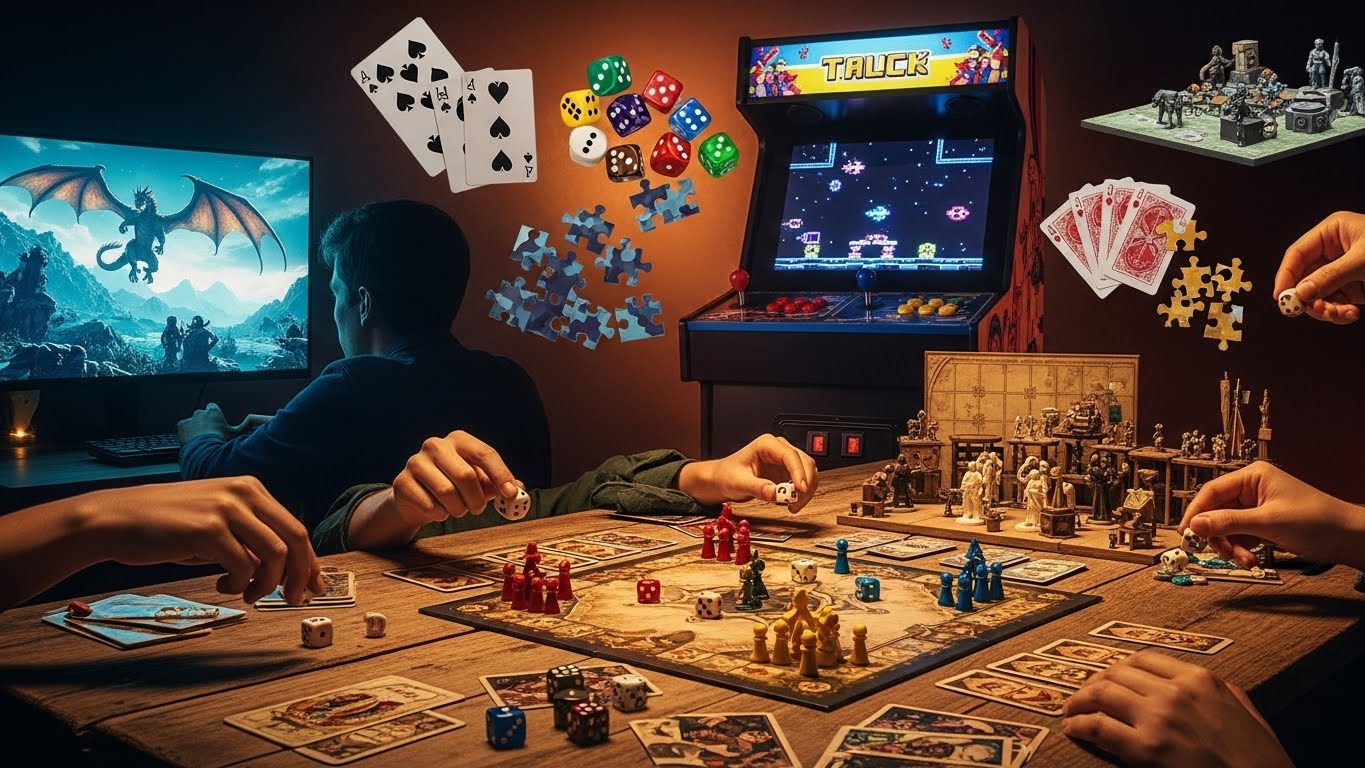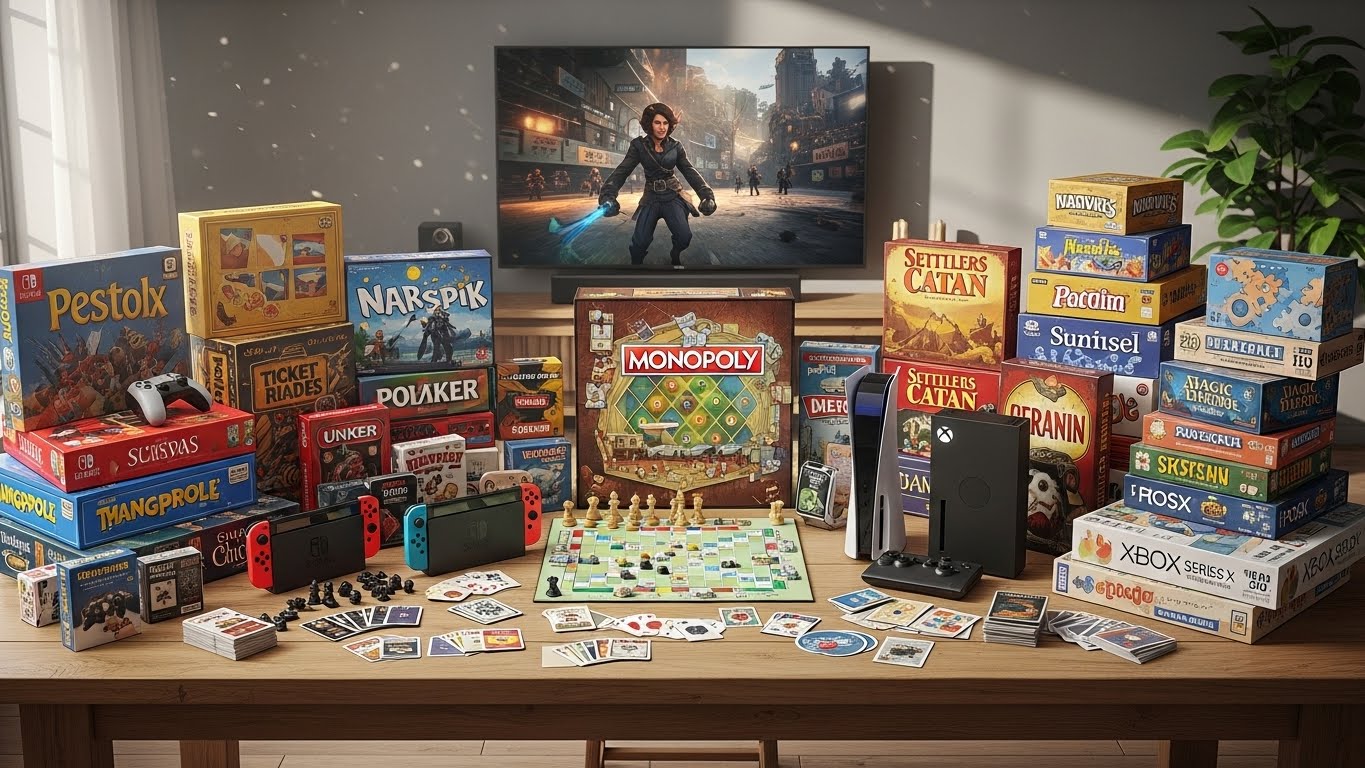
Gaming has come a long way since its humble beginnings. Once a niche hobby, gaming has evolved into a multi-billion-dollar industry, captivating millions around the globe. Whether it’s a casual mobile game, an immersive RPG, or a high-stakes esports competition, games have become an essential part of modern entertainment. But how did gaming grow from simple arcade machines to the sprawling, interactive experiences we see today? This blog post delves into the history, impact, and future of gaming, shedding light on its transformative journey and the ways it continues to shape entertainment and culture.
The Birth of Video Games: The Dawn of a New Era
The 1970s marked the birth of video games as we know them today. While gaming as a concept can be traced back to earlier mechanical and electronic devices, it was the introduction of arcade games that truly set the stage for the gaming revolution. In 1972, Atari released Pong, one of the first commercially successful arcade games. Simple in concept, Pong was a virtual version of table tennis where players used paddles to hit a ball back and forth. Its appeal was immediate, and arcade games quickly became a staple of entertainment in bars, arcades, and even shopping malls.
By the mid-1970s, the gaming landscape expanded with titles like Space Invaders and Asteroids. These games introduced the concept of space shooters and side-scrolling action, capturing the imaginations of gamers with their pixelated graphics and fast-paced gameplay. These early arcade games were simple but addictive, relying on high-score chasing as a form of competition and replayability. They established the basic foundations of gaming: skill-based progression, competition, and a social environment where people gathered to play.
The Rise of Home Consoles: Gaming Goes Personal
In the late 1970s and early 1980s, gaming experienced another major shift: the introduction of home consoles. The idea of playing video games at home, in the comfort of your living room, was a game-changer (pun intended). The Atari 2600, released in 1977, was one of the first home consoles to feature interchangeable game cartridges. This allowed players to enjoy a variety of games without having to go to an arcade. The console quickly became a household name, offering iconic titles like Space Invaders, Pitfall!, and Asteroids for home play.
The early 1980s also witnessed the release of the Nintendo Entertainment System (NES) in 1985. The NES is often credited with revitalizing the video game industry after the 1983 video game crash, where an oversaturation of low-quality games led to a market collapse. Nintendo’s stringent quality control measures ensured that only high-quality titles reached consumers, and this focus on quality over quantity helped reestablish the gaming industry as a legitimate form of entertainment.
With consoles like the NES, the Sega Genesis, and the Super Nintendo Entertainment System (SNES), the 1980s and 1990s saw the rise of some of the most beloved gaming franchises, such as Super Mario, The Legend of Zelda, Sonic the Hedgehog, and Street Fighter. These titles not only defined the gaming experience but also introduced the world to narrative-driven gameplay and immersive worlds that would later become a hallmark of the industry.
The 3D Revolution: Expanding the Limits of Possibility
The 1990s brought with it another monumental leap in gaming technology—the transition from 2D to 3D graphics. The introduction of 3D graphics revolutionized the gaming experience, creating more immersive environments and characters. The PlayStation, launched in 1994, was one of the first consoles to fully embrace 3D graphics, delivering groundbreaking games like Gran Turismo and Final Fantasy VII. These games showed players that gaming could offer not just entertainment but also an emotionally rich, cinematic experience.
Meanwhile, the Nintendo 64, released in 1996, brought iconic titles such as Super Mario 64, The Legend of Zelda: Ocarina of Time, and GoldenEye 007 into the gaming world. These titles pushed the boundaries of gameplay with expansive 3D worlds, complex puzzles, and multiplayer modes, introducing new forms of storytelling and interactivity that would become central to future gaming experiences.
The 1990s also saw the rise of PC gaming, which provided even more advanced graphics and processing power. PC games like Doom and Warcraft established genres that would dominate the industry for years to come, from first-person shooters (FPS) to real-time strategy (RTS). With online connectivity becoming more common, multiplayer gaming and LAN parties began to gain popularity, laying the groundwork for the modern online gaming culture that would follow.
Online Gaming and the Rise of MMORPGs
As the internet became more accessible in the late 1990s and early 2000s, gaming underwent yet another major transformation. The introduction of online gaming allowed players to compete and cooperate with others across the globe. Early examples include multiplayer games like Quake and StarCraft, which allowed players to connect over dial-up internet and engage in real-time battles. These games helped establish online communities and laid the foundation for the massive growth of online gaming.
In 2004, the release of World of Warcraft (WoW) ushered in the era of massive multiplayer online role-playing games (MMORPGs). WoW quickly became a cultural phenomenon, offering players a vast, open world where they could explore, complete quests, and interact with thousands of others in real-time. MMORPGs like WoW helped solidify the idea that games could be a long-term investment, with players dedicating years to leveling up their characters and building relationships within the game world.
Online gaming also led to the birth of esports—competitive gaming at a professional level. Games like League of Legends, Dota 2, and Counter-Strike turned gaming into a spectator sport, with millions of viewers watching tournaments online and on television. Esports has since become a billion-dollar industry, with players earning sponsorships, salaries, and even recognition as celebrities within the gaming community.
Mobile Gaming: Gaming on the Go
The early 2000s saw the rise of mobile gaming, thanks to the proliferation of smartphones and app stores. Games like Angry Birds, Candy Crush Saga, and Pokémon Go brought gaming to a wider, more casual audience. Mobile games are often simpler, with short play sessions and easily accessible mechanics that appeal to people of all ages.
Mobile gaming has become one of the largest segments of the gaming industry, surpassing even console gaming in terms of revenue. The portability of mobile games allows people to play anywhere, whether on the bus, during a lunch break, or while waiting in line. The combination of free-to-play models, in-app purchases, and social connectivity has made mobile gaming an integral part of the entertainment landscape.
The Rise of Virtual Reality and Augmented Reality
In recent years, virtual reality (VR) and augmented reality (AR) have emerged as groundbreaking technologies that promise to reshape the future of gaming. VR, with its fully immersive 3D worlds, allows players to step into the game and experience it as though they were truly inside it. The release of VR headsets like the Oculus Rift and PlayStation VR has allowed players to explore virtual worlds in a way that was previously unimaginable.
Games like Beat Saber, Half-Life: Alyx, and Superhot VR have demonstrated the potential of VR gaming, offering experiences that are unlike anything available on traditional consoles or PCs. VR allows players to physically interact with their environment, whether it’s swinging a lightsaber or shooting enemies with hand gestures. The possibilities are endless, and as the technology becomes more accessible and affordable, VR gaming is poised to become a dominant force in the industry.
Augmented reality, on the other hand, blends the virtual world with the real world. Pokémon Go was a groundbreaking example of AR in gaming, encouraging players to explore their neighborhoods while searching for virtual creatures. AR gaming has the potential to create entirely new types of experiences that combine real-world exploration with digital content.
The Future of Gaming: Trends to Watch
The gaming industry is constantly evolving, and there are several exciting trends to watch in the coming years.
- Cloud Gaming: With services like Google Stadia and Xbox Cloud Gaming, cloud-based gaming allows players to stream games directly from the cloud without needing powerful hardware. This could democratize gaming by making high-quality games accessible to anyone with an internet connection.
- AI and Procedural Generation: Artificial intelligence (AI) is increasingly being used to create dynamic, responsive game worlds. Procedural generation, where game worlds are created algorithmically rather than by hand, could lead to infinitely varied environments and experiences that feel truly unique.
- Cross-Platform Play: The trend of cross-platform play—where players can compete with or against others regardless of their platform (PC, console, or mobile)—is growing. This creates more inclusive gaming communities and fosters greater interaction between players.
- Social Gaming: With the rise of platforms like Twitch and Discord, gaming is becoming more social. Streaming, community building, and live events will continue to blur the lines between traditional gaming and social media.
Conclusion: Gaming’s Continuing Legacy
From its early days as an arcade pastime to the sprawling virtual worlds of today, gaming has evolved in ways that few could have predicted. It has transcended its origins as a simple form of entertainment and become a powerful cultural force, shaping the way we socialize, compete, and experience stories.
As technology continues to advance, gaming will only become more immersive, interactive, and interconnected. Whether through virtual reality, cloud gaming, or social platforms, the future of gaming is bright, offering endless possibilities for both players and developers. One thing is clear: