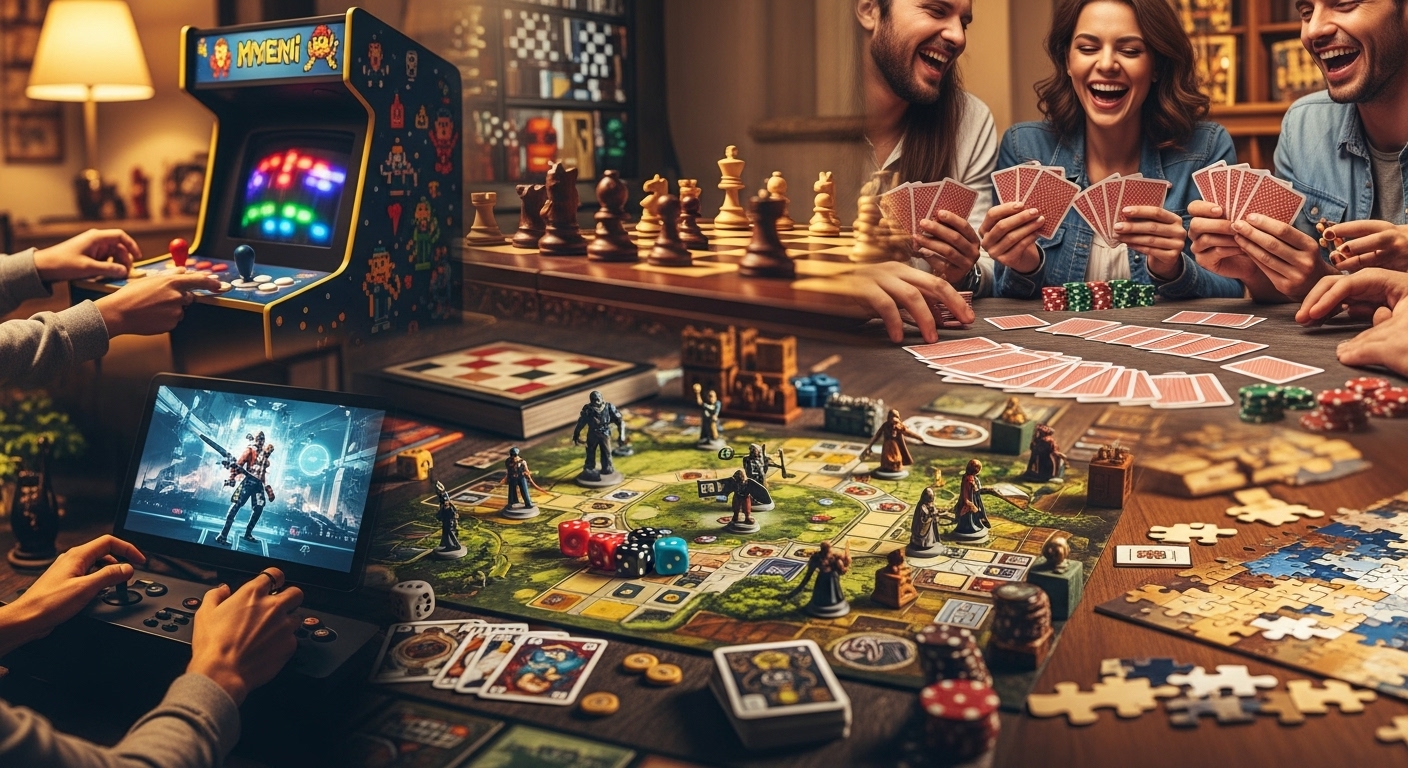
Games have always been a vital part of human culture. They entertain, challenge, educate, and unite people across generations and continents. Whether it’s a simple board game played on a wooden surface centuries ago or a modern virtual reality adventure that transports players into new worlds, the essence of gaming remains the same—fun, strategy, and imagination. Today, gaming is not only a pastime but a powerful industry and an influential form of art that shapes how we interact, learn, and even think.
The Origins of Games and Their Cultural Importance
The story of games begins thousands of years ago. Archaeological findings show that ancient civilizations, from Egypt to Mesopotamia, enjoyed board games as a source of amusement and mental stimulation. The Egyptian game Senet, believed to date back to around 3100 BCE, is one of the earliest known board games. It wasn’t just entertainment—it held religious and spiritual significance, symbolizing the journey of the soul through the afterlife.
Similarly, the Royal Game of Ur from ancient Mesopotamia and Go from China were among the earliest strategic games that tested intellect and patience. These early games laid the groundwork for the strategic and competitive nature of modern gaming. They taught people the joy of thinking ahead, the thrill of victory, and the humility of defeat.
Games were also social tools. They brought people together, teaching communication and cooperation. Even in societies separated by geography and language, games served as universal connectors. Whether it was a group of children tossing pebbles in ancient Greece or warriors testing skill in medieval tournaments, games have always reflected humanity’s need for challenge and community.
The Birth of Traditional and Tabletop Games
As time progressed, games became more structured and widespread. Chess emerged in India around the 6th century as Chaturanga and evolved into the chess we know today. This game quickly became a symbol of intelligence and strategy. It spread across continents and classes, enjoyed by kings and scholars alike. Similarly, backgammon in Persia and Mahjong in China developed as timeless classics, representing logic, skill, and chance.
Card games also began to rise during the Middle Ages. What started as handcrafted art for the elite in Asia and Europe evolved into a global pastime. By the 17th and 18th centuries, playing cards were everywhere—from royal courts to street corners. They inspired social gatherings, gambling traditions, and even early mathematical studies of probability.
The 19th and 20th centuries brought the rise of board games that families still enjoy today. Titles like Monopoly, Scrabble, and Clue turned game nights into household traditions. These games were simple to learn but deep enough to keep players engaged for hours. They also taught valuable lessons—resource management, vocabulary, deduction—and gave people a shared way to relax and bond.
The Dawn of Video Games
The 20th century saw a technological revolution that forever changed how people played. The 1950s and 60s introduced computer-based games in laboratories and universities. These were primitive experiments compared to today’s standards, but they laid the foundation for the digital entertainment age. The 1970s then marked the birth of the arcade era, with iconic titles like Pong and Space Invaders leading the charge.
Arcades became the social hubs of the 1980s. Teenagers gathered in neon-lit rooms filled with electronic sounds and flashing screens. Games like Pac-Man, Donkey Kong, and Galaga became cultural icons. They introduced the concept of high scores and competitive gaming long before esports was born. Each coin inserted was a ticket to excitement and competition.
Soon, gaming moved from arcades to living rooms. The introduction of home consoles, led by companies like Atari, Nintendo, and Sega, changed entertainment forever. The Nintendo Entertainment System (NES) in the mid-1980s gave birth to characters that remain beloved to this day—Mario, Zelda, and Metroid. These games told stories, presented challenges, and built worlds that captured imaginations everywhere.
The Rise of Personal Computers and Strategy Games
While consoles dominated living rooms, personal computers opened new doors for gaming creativity. The PC became a platform for more complex, open-ended, and player-driven experiences. Games like SimCity, Civilization, and Age of Empires gave players god-like control over entire cities, empires, and civilizations. They encouraged creativity, long-term planning, and problem-solving.
Role-playing games (RPGs) such as Ultima and Baldur’s Gate allowed players to live out fantasies in vast, detailed worlds filled with characters, quests, and moral choices. These games blurred the line between storytelling and interactivity. They gave players freedom to shape their adventures—a concept that remains central to many modern games.
At the same time, competitive games like Doom and Quake introduced fast-paced first-person action. They also gave birth to the earliest online multiplayer communities. Players connected through local networks to battle one another in virtual arenas, setting the stage for the online gaming revolution.
The Golden Age of Consoles
The 1990s and early 2000s are often seen as the golden age of console gaming. The competition between Nintendo, Sega, and Sony created an explosion of innovation. The transition from 2D to 3D graphics transformed how games looked and felt. Titles like Super Mario 64, The Legend of Zelda: Ocarina of Time, and Final Fantasy VII demonstrated that games could be cinematic experiences with emotional depth and visual artistry.
Sony’s PlayStation brought a new level of maturity to gaming, targeting older audiences with storytelling masterpieces like Metal Gear Solid and Resident Evil. Meanwhile, Sega’s Sonic the Hedgehog captured the energy of a generation, blending speed with style. The late 1990s also saw the birth of online console play, hinting at the massive connected experiences to come.
The Online Revolution and the Birth of Esports
With the rise of the internet, gaming entered a new age. Online multiplayer experiences allowed players from around the world to connect, compete, and cooperate in ways never before possible. Titles like Counter-Strike, World of Warcraft, and Runescape became social phenomena, building global communities.
This online culture led to the rise of esports, where competitive gaming evolved into a spectator sport. Players became professionals, earning fame and fortune through skill, teamwork, and dedication. Tournaments filled arenas, and millions watched live streams of matches. Games like League of Legends, Dota 2, and Fortnite became global stages for digital athletes.
Esports changed perceptions of gaming. What was once dismissed as a hobby became recognized as a legitimate career path and competitive discipline. Teams, sponsorships, and organizations emerged, mirroring traditional sports structures. Today, esports stands shoulder to shoulder with football and basketball in terms of global fan engagement.
The Rise of Mobile and Casual Gaming
The 2010s brought another major shift—mobile gaming. With the advent of smartphones, games were suddenly in everyone’s pockets. Titles like Angry Birds, Candy Crush, and Clash of Clans showed that gaming could be both accessible and addictive. People who never considered themselves gamers became hooked on quick, colorful challenges.
Mobile games reached audiences far beyond the traditional gaming demographic. They appealed to children, adults, and seniors alike. The simplicity of tap-based gameplay combined with the convenience of mobile devices made gaming a daily routine for billions.
This era also saw the rise of social games—titles that encouraged cooperation and competition among friends. Whether through sharing progress or challenging others, mobile gaming reinforced the idea that games are social experiences at heart.
Virtual Reality, Augmented Reality, and the Future of Immersive Play
As technology continues to advance, gaming has entered yet another frontier—virtual reality (VR) and augmented reality (AR). VR places players directly inside digital worlds, allowing them to look around, move, and interact as if they were truly there. Games like Beat Saber and Half-Life: Alyx demonstrate the incredible potential of this medium.
AR, on the other hand, blends the real and digital worlds. The global success of Pokémon GO showed how gaming could encourage physical activity and exploration. It transformed streets, parks, and cities into living game boards.
These innovations hint at a future where games become even more immersive, emotional, and integrated into daily life. With advances in artificial intelligence and haptic feedback, players may soon experience games that respond dynamically to their emotions and decisions.
The Cultural and Educational Impact of Games
Beyond entertainment, games have proven their value as tools for education, creativity, and emotional growth. Educational games teach math, science, and history in engaging ways. Simulation games train professionals in fields like medicine, aviation, and engineering. Strategy and puzzle games improve cognitive skills such as memory, problem-solving, and attention.
Games also explore complex human emotions and moral dilemmas. Titles like The Last of Us and Journey evoke empathy, compassion, and reflection. They show that gaming is not just about fun—it’s about storytelling, expression, and connection.
The art design, music, and writing in games now rival those in movies and literature. Developers have become modern storytellers, creating experiences that can make players laugh, cry, or think deeply.
The Social Connection of Gaming
Gaming is one of the most social forms of media today. Online communities, streaming platforms, and cooperative play have built friendships across borders and cultures. Many people use games to stay connected with loved ones, share experiences, or simply unwind after a long day.
During global challenges and periods of isolation, games have provided comfort and connection. Virtual worlds like Minecraft and Animal Crossing have served as safe spaces for creativity, relaxation, and socialization.
The Business and Future of the Gaming Industry
The gaming industry is now one of the largest entertainment sectors in the world. It surpasses music and film combined in revenue. Developers and publishers continually push boundaries to create bigger, more immersive worlds. Indie creators also thrive, crafting unique and personal projects that reach global audiences through digital distribution.
The future of gaming looks limitless. Cloud gaming allows people to play high-quality titles without powerful hardware. Artificial intelligence enhances storytelling and gameplay realism. Cross-platform play breaks down walls between devices and players.
In the coming years, games will likely become even more personalized, adaptive, and socially connected. They will continue to shape culture, inspire creativity, and bring joy to billions of people around the world.
Conclusion: The Timeless Spirit of Play
From ancient stones and boards to glowing screens and virtual realms, the journey of games mirrors the story of human creativity. Games have evolved, but their purpose remains unchanged—to entertain, to teach, to connect, and to inspire.
In every generation, people play not just to pass time but to express curiosity, imagination, and joy. Whether you’re rolling dice with friends, battling dragons in a fantasy world, or exploring galaxies in virtual space, gaming celebrates the very essence of being human—the desire to learn, compete, and dream.
Games are more than entertainment. They are stories, art, and shared experiences that define our culture. And as technology continues to grow, so too will our ability to play, imagine, and create new worlds together.