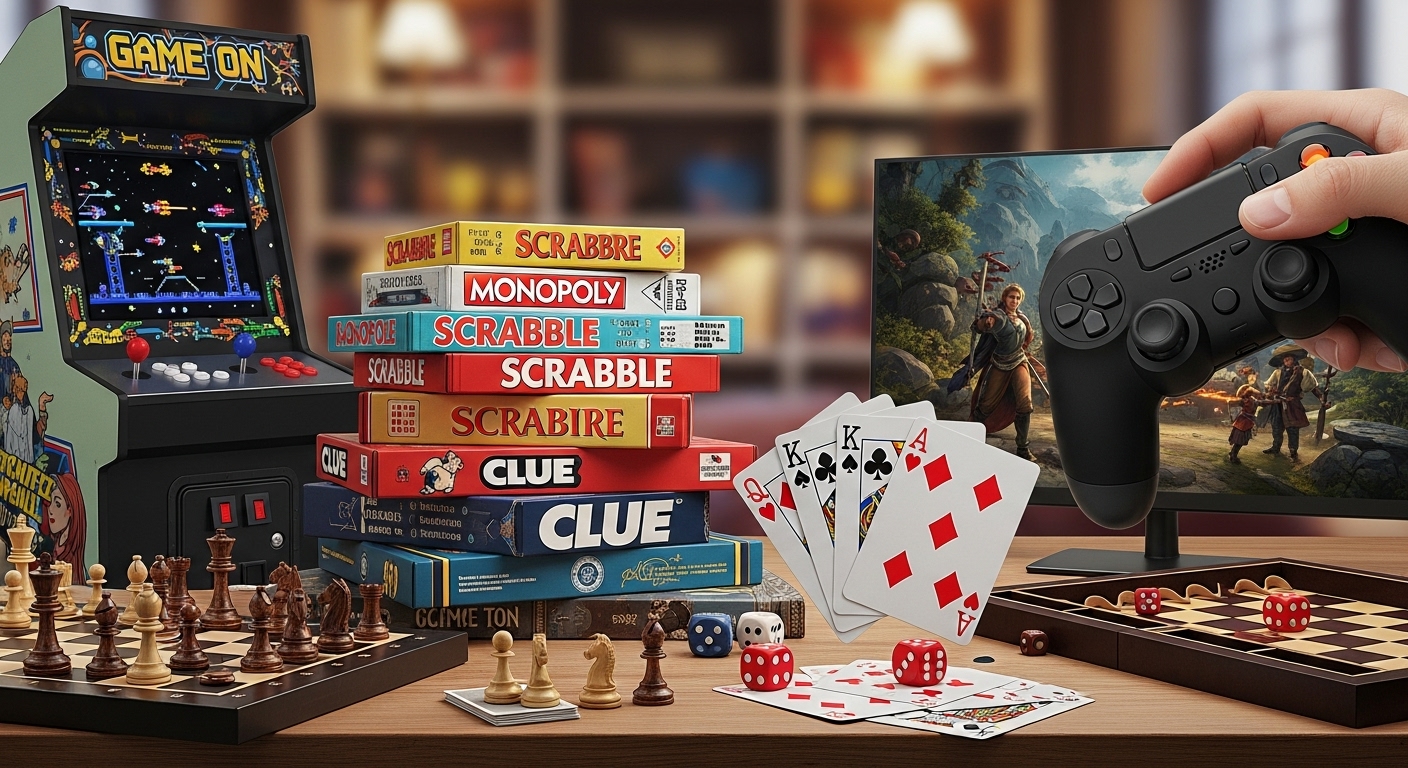
Gaming has evolved tremendously since its humble beginnings. From pixelated 2D games to hyper-realistic open-world environments, the world of video games has undergone a massive transformation over the past several decades. In this blog post, we’ll take an in-depth look at the history of gaming, explore the technological advancements that have shaped it, and delve into its cultural impact. Whether you’re a casual gamer, an enthusiast, or someone who has witnessed the rise of video games from the very beginning, this article will offer insight into how gaming has evolved and where it’s headed.
1. The Birth of Video Games
The story of gaming begins in the 1950s and 1960s, when computer scientists and engineers began experimenting with interactive entertainment. Early video games were incredibly rudimentary compared to today’s standards, but they laid the groundwork for what was to come. One of the first examples of a video game was Tennis for Two, created in 1958 by physicist William Higinbotham. This simple tennis simulation was displayed on an oscilloscope, a type of electronic test instrument. It was far from a commercial product but showed the potential of interactive entertainment.
However, it wasn’t until the 1970s that video games began to gain traction with the public. One of the first commercially successful arcade games, Pong, was released in 1972 by Atari. The game’s simplistic gameplay—players controlled paddles to hit a ball back and forth—was a hit in arcades and marked the beginning of gaming as we know it today. This era of arcade games would come to define the early years of gaming, with titles like Space Invaders, Pac-Man, and Donkey Kong becoming household names.
2. The Rise of Home Consoles
In the late 1970s and early 1980s, video games began to move from the arcades into the home. The Atari 2600, released in 1977, was one of the first home gaming consoles to gain widespread popularity. It allowed players to insert different cartridges to play a variety of games, a concept that was revolutionary at the time. This marked the beginning of the console era, where games could be played in the comfort of one’s own home.
During the early 1980s, home consoles began to dominate the gaming landscape. Systems like the Nintendo Entertainment System (NES) and the Sega Genesis introduced more advanced graphics and sound, providing players with a deeper gaming experience. The NES, in particular, became a cultural phenomenon, with iconic games like Super Mario Bros., The Legend of Zelda, and Metroid becoming cornerstones of the gaming industry. The success of these consoles laid the foundation for the gaming industry to grow into a multibillion-dollar entertainment sector.
3. The 3D Revolution: Pushing the Boundaries of Graphics
As the 1990s arrived, so did the next major leap in gaming technology: 3D graphics. The introduction of 3D games completely changed the way players interacted with games, offering a more immersive and dynamic experience. The release of the Sony PlayStation in 1994 marked a pivotal moment in the industry. The PlayStation’s ability to render 3D environments and characters was a game-changer, opening up new possibilities for developers.
One of the most iconic games to take advantage of the PlayStation’s 3D capabilities was Final Fantasy VII. The game featured fully rendered 3D environments, characters with intricate designs, and a complex narrative. It quickly became one of the best-selling games of all time, showcasing the potential of 3D technology in gaming.
The Nintendo 64, released in 1996, was another key player in the 3D revolution. It introduced groundbreaking titles like Super Mario 64 and The Legend of Zelda: Ocarina of Time, both of which are still regarded as some of the greatest games ever made. These games demonstrated how 3D worlds could be explored and interacted with, forever changing the way games were designed.
4. The Internet and Online Multiplayer Gaming
With the turn of the millennium came another seismic shift in the gaming landscape: the rise of online multiplayer gaming. Broadband internet connections became more widespread, and developers began to realize the potential of connecting players across the globe. In 2001, Microsoft launched the Xbox console, which included Xbox Live, a revolutionary service that allowed players to connect to the internet and play against one another in real time.
Games like Halo 2 and Counter-Strike helped popularize online multiplayer gaming, creating communities of players who could challenge each other from the comfort of their own homes. This marked the beginning of a new era of gaming, where social interaction, teamwork, and competition became central to the experience.
In the years that followed, online gaming became increasingly sophisticated. Multiplayer games like World of Warcraft and Call of Duty gained massive followings, creating entire subcultures and influencing the gaming industry in profound ways. The rise of esports, competitive gaming at the professional level, also emerged during this time, giving rise to tournaments, sponsorships, and a global fanbase.
5. The Mobile Gaming Boom
In the late 2000s and early 2010s, mobile gaming exploded in popularity. The release of smartphones with powerful processors, touchscreens, and app stores made it easier than ever for players to access games on the go. Titles like Angry Birds, Candy Crush Saga, and Clash of Clans became instant hits, appealing to casual gamers who didn’t necessarily want to invest in expensive consoles or gaming PCs.
The success of mobile gaming led to a shift in the gaming industry, with developers increasingly focusing on creating games that could be played in short bursts, making them more accessible to a broader audience. Mobile games also introduced new business models, such as freemium games and in-app purchases, which became a significant revenue stream for developers.
Today, mobile gaming is one of the largest segments of the gaming industry. It has democratized gaming, allowing millions of people to play games without needing specialized hardware. The mobile platform also opened up new avenues for innovation, with augmented reality (AR) games like Pokémon Go showing how mobile gaming could blend the digital and physical worlds.
6. The Power of Virtual Reality (VR) and Augmented Reality (AR)
One of the most exciting developments in modern gaming is the rise of virtual reality (VR) and augmented reality (AR). These technologies promise to take gaming to a whole new level, offering experiences that blur the line between the real and digital worlds.
Virtual reality gaming, through devices like the Oculus Rift, HTC Vive, and PlayStation VR, immerses players in fully interactive 3D environments. Players can physically move around, interact with objects, and experience games from a first-person perspective that feels incredibly lifelike. VR has already made waves in various gaming genres, from action-packed shooters to intricate puzzle games.
Augmented reality, on the other hand, overlays digital elements onto the real world. Pokémon Go was a landmark game in AR gaming, as it allowed players to catch virtual creatures while walking around their neighborhoods. AR has since found its way into various applications, from puzzle games to location-based experiences, offering new ways for players to interact with their surroundings.
While VR and AR are still in their early stages, both technologies have the potential to revolutionize gaming, creating fully immersive worlds that feel as real as the physical world.
7. The Future of Gaming: Artificial Intelligence and Cloud Gaming
As technology continues to evolve, so does the future of gaming. Two of the most promising areas of innovation are artificial intelligence (AI) and cloud gaming.
Artificial Intelligence
AI has already had a profound impact on gaming, particularly in how non-playable characters (NPCs) behave. However, AI’s potential in gaming goes far beyond just NPCs. Developers are exploring ways to use AI to create more dynamic, unpredictable game worlds that respond to player behavior in real time. Imagine a game where the story adapts based on your decisions, or where enemies learn and evolve to become more challenging based on your playstyle.
AI-driven content generation is another exciting development. Games could one day be able to create vast, procedurally generated worlds or narratives that are unique to each player, offering endless replayability.
Cloud Gaming
Cloud gaming is another technology that could shape the future of gaming. With cloud gaming, players no longer need expensive hardware to run high-quality games. Instead, games are hosted on powerful servers in data centers and streamed directly to a player’s device. This could significantly lower the barrier to entry for gaming, as players will only need an internet connection to play the latest titles.
Platforms like Google Stadia, Microsoft’s Xbox Cloud Gaming (formerly Project xCloud), and NVIDIA GeForce Now have already demonstrated the potential of cloud gaming. As internet speeds continue to improve and latency issues are reduced, cloud gaming could become the dominant form of gaming in the future.
8. The Cultural Impact of Gaming
Beyond its technological advancements, gaming has had a profound impact on culture and society. Video games have become a form of art, with titles like The Last of Us, Red Dead Redemption 2, and Journey being lauded for their storytelling, graphics, and emotional depth. Games have the power to explore complex themes, evoke powerful emotions, and create shared experiences among players.
Gaming has also become a social activity, with millions of people connecting with others through online multiplayer games, streaming platforms, and social media. Twitch, YouTube Gaming, and other streaming platforms have turned gaming into a spectator sport, with millions of fans tuning in to watch their favorite gamers and esports teams compete.
Furthermore, the rise of game development tools and platforms like Unity and Unreal Engine has allowed indie developers to flourish, creating unique and experimental