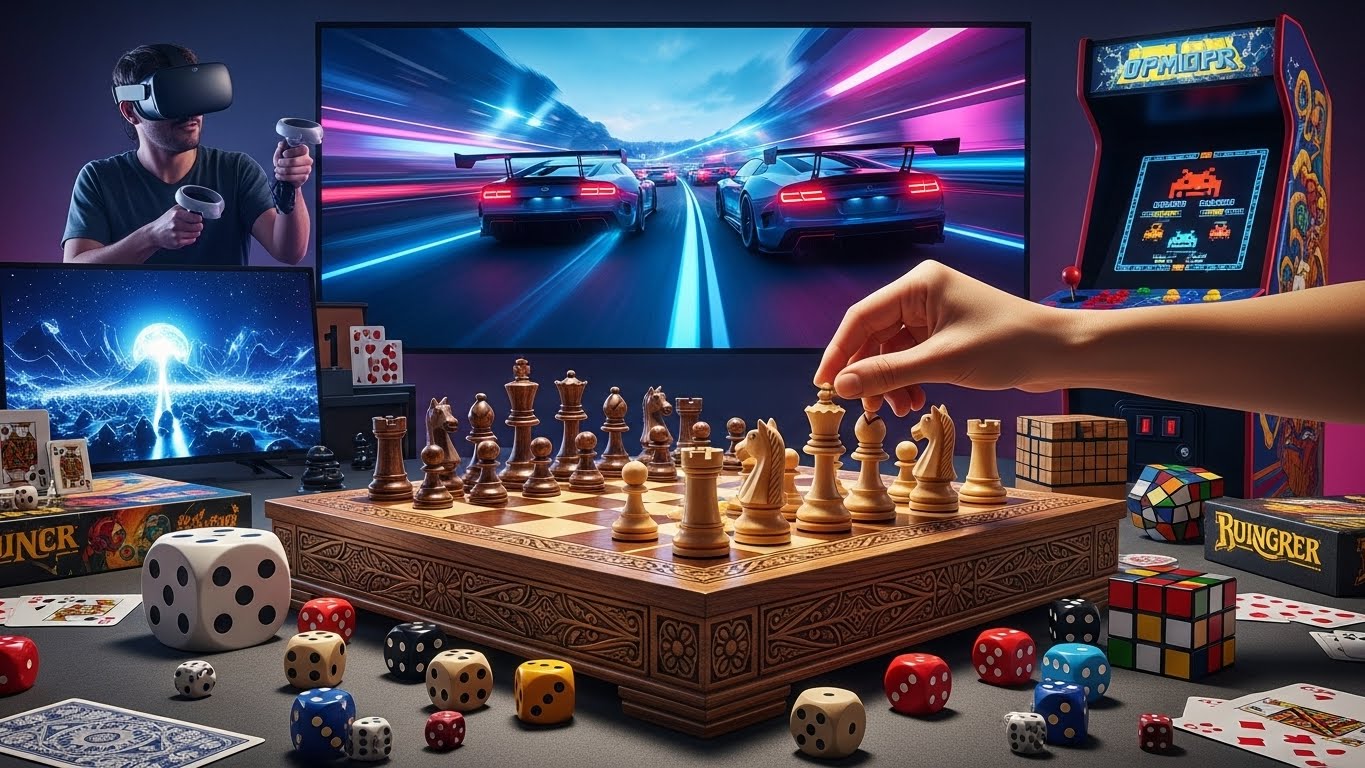
Games have always been an integral part of human culture, from ancient board games and outdoor sports to the modern-day digital entertainment we engage with on our devices. The landscape of gaming has transformed significantly over the years, embracing technological advancements, changing player preferences, and new platforms that have redefined how we think about and experience play. Today, games are no longer limited to a specific format or medium but span across various genres, devices, and styles, catering to a diverse audience. In this blog post, we will explore the world of games, from their origins to the current trends shaping the gaming landscape, and examine what the future holds for the ever-evolving world of play.
The Evolution of Games: From Ancient Play to Digital Worlds
The history of games can be traced back to ancient civilizations, where the concept of play was not only for entertainment but also for learning, strategy, and socialization. Games like chess, which originated in India over a thousand years ago, or the ancient Egyptian game of Senet, reveal the importance of gaming in culture. These early games were often symbolic, educational, or competitive, reflecting the values and intellectual pursuits of the time.
As human societies progressed, so too did the nature of games. The development of playing cards in the 15th century in Europe led to the rise of card games, which became popular across social classes. Meanwhile, outdoor sports like football, cricket, and tennis also emerged and became formalized in the 19th century, laying the foundation for the modern sports industry.
The major shift in gaming came with the advent of video games in the 20th century. The first video game, Tennis for Two, was created in 1958 by physicist William Higinbotham, and a few years later, the iconic Pong by Atari was released, marking the beginning of the digital gaming revolution. In the 1980s, home consoles like the Nintendo Entertainment System and Sega Genesis brought gaming into living rooms around the world, making it more accessible to a wider audience.
As technology advanced, so did the complexity and creativity of games. The 1990s and 2000s saw the rise of 3D graphics, immersive storytelling, and the birth of online gaming, giving players the ability to compete and collaborate in virtual worlds with people from across the globe. Today, we see the integration of virtual reality (VR), augmented reality (AR), and mobile gaming, further expanding the boundaries of what games can be.
Types of Games: From Traditional to Digital Play
Games come in all shapes and sizes, catering to different interests, age groups, and skill levels. From casual mobile games to highly competitive eSports, the variety of games today is more diverse than ever. Let’s take a closer look at some of the main types of games that have captured the imagination of players around the world.
1. Traditional Board Games and Card Games
Despite the rise of digital gaming, traditional board games and card games continue to be popular among people of all ages. Games like Monopoly, Scrabble, and Clue have been staples in households for generations, and new board games are constantly being developed to keep the genre fresh. The tactile experience of physically interacting with pieces, cards, and boards has its own appeal, encouraging face-to-face interaction and socializing.
Card games like Poker, Bridge, and Solitaire have also maintained their popularity. Many of these games have been adapted for digital platforms, allowing players to enjoy a virtual version while maintaining the same strategies and dynamics of the original.
2. Sports and Physical Games
Sports have always been a part of human culture, but video games have brought a new layer of excitement to them. Traditional sports like football, basketball, and soccer have been reimagined in virtual formats, with games like FIFA, NBA 2K, and Madden NFL providing players with the opportunity to engage in digital versions of their favorite sports. These games have grown to include realistic graphics, player customization, and online multiplayer modes, making them an immersive experience for fans of the sports.
Physical games like dancing and fitness-based games also fall under this category. With the release of motion-controlled gaming consoles like the Nintendo Wii, Xbox Kinect, and PlayStation Move, players could engage in active gaming experiences, such as dancing or sports simulation, making fitness fun and interactive.
3. Role-Playing Games (RPGs)
Role-playing games (RPGs) are one of the most beloved genres in gaming, offering players the chance to step into the shoes of a character and experience a world through their eyes. These games often involve deep storytelling, character development, and exploration of vast, fictional universes. RPGs can range from single-player adventures to massive multiplayer online role-playing games (MMORPGs), where players interact with others in persistent virtual worlds.
Classic RPGs like Final Fantasy, The Elder Scrolls, and The Witcher series have set the standard for the genre, while MMORPGs like World of Warcraft and Guild Wars 2 have built entire online communities where players cooperate, compete, and form guilds.
4. Action and Adventure Games
Action and adventure games are often defined by fast-paced gameplay, exploration, and problem-solving. These games can combine elements of combat, platforming, puzzles, and narrative-driven gameplay. Franchises like The Legend of Zelda, Tomb Raider, and Assassin’s Creed have popularized the genre, offering players thrilling quests, epic battles, and intricate worlds to explore.
These games have evolved over time, incorporating more complex storylines, open-world elements, and enhanced graphics. The mix of action, adventure, and strategy keeps players engaged, and the progression of the player’s character or storyline provides a sense of accomplishment and immersion.
5. Simulation Games
Simulation games allow players to experience real-world activities or create their own virtual worlds. These games cover a wide range of topics, from city-building (e.g., SimCity), farming (e.g., Stardew Valley), and life simulation (e.g., The Sims) to flight simulations and car racing games.
Simulation games are often designed for players who enjoy slower-paced, strategic gameplay, as they involve planning, resource management, and decision-making. The level of detail in simulation games can be staggering, allowing players to immerse themselves in realistic environments and scenarios.
6. Casual and Mobile Games
Casual games have become a dominant force in the gaming industry, especially on mobile platforms. These games are typically easy to learn, quick to play, and can be enjoyed in short bursts. Games like Candy Crush, Angry Birds, and Clash of Clans are perfect examples of how mobile gaming has made gaming accessible to a broader audience, including people who may not identify as hardcore gamers.
Mobile games also benefit from the rise of social gaming, where players can challenge their friends, share progress, or collaborate in virtual environments. The accessibility of mobile games, combined with the variety of genres available, has made them a staple in everyday life.
7. Esports and Competitive Gaming
Esports represents the competitive side of gaming, where players and teams compete in organized tournaments for large cash prizes, sponsorships, and fame. The rise of esports has made professional gaming a legitimate career choice, with games like League of Legends, Counter-Strike: Global Offensive, Dota 2, and Fortnite dominating the competitive gaming scene.
Esports tournaments are broadcasted globally, with millions of viewers tuning in to watch top players compete. Esports has also led to the development of collegiate and professional leagues, making it a mainstream form of entertainment for gamers and fans alike.
The Impact of Technology on Gaming
The role of technology in gaming cannot be overstated. The rapid advancements in graphics, artificial intelligence, virtual reality (VR), and augmented reality (AR) have revolutionized the way we experience games. In the past, players were limited by the graphical capabilities of their consoles or PCs, but now, realistic graphics, lifelike animations, and vast, open-world environments are commonplace.
Virtual reality has opened up new possibilities for immersion, allowing players to step into fully interactive 3D worlds and experience games as if they were physically present. VR gaming has already made an impact in genres like horror, exploration, and simulation, and as VR technology becomes more affordable and refined, its influence on gaming will continue to grow.
Augmented reality, popularized by games like Pokémon GO, blends the digital world with the real world, encouraging players to interact with their environment while engaging with virtual content. This fusion of reality and digital gameplay has the potential to reshape gaming experiences in ways we have yet to fully explore.
The Future of Gaming: What’s Next?
As the gaming industry continues to evolve, we can expect even more exciting innovations. The potential for cloud gaming, where players can stream games directly to their devices without the need for expensive hardware, is becoming a reality. Platforms like Google Stadia, Microsoft’s Xbox Cloud Gaming, and Nvidia GeForce Now are leading the charge in making high-quality gaming more accessible to people with less powerful devices.
The integration of artificial intelligence (AI) in gaming will also continue to grow, with AI-driven characters and dynamic storytelling becoming more sophisticated. Games will be able to adapt to a player’s choices in real time, creating more personalized and engaging experiences.
The lines between different types of games will continue to blur as genres mix and evolve. We may see more hybrid games that combine elements from various genres, offering a truly unique experience. As games become more interactive, social, and immersive, the future of gaming promises even more innovation and excitement for players around the world.