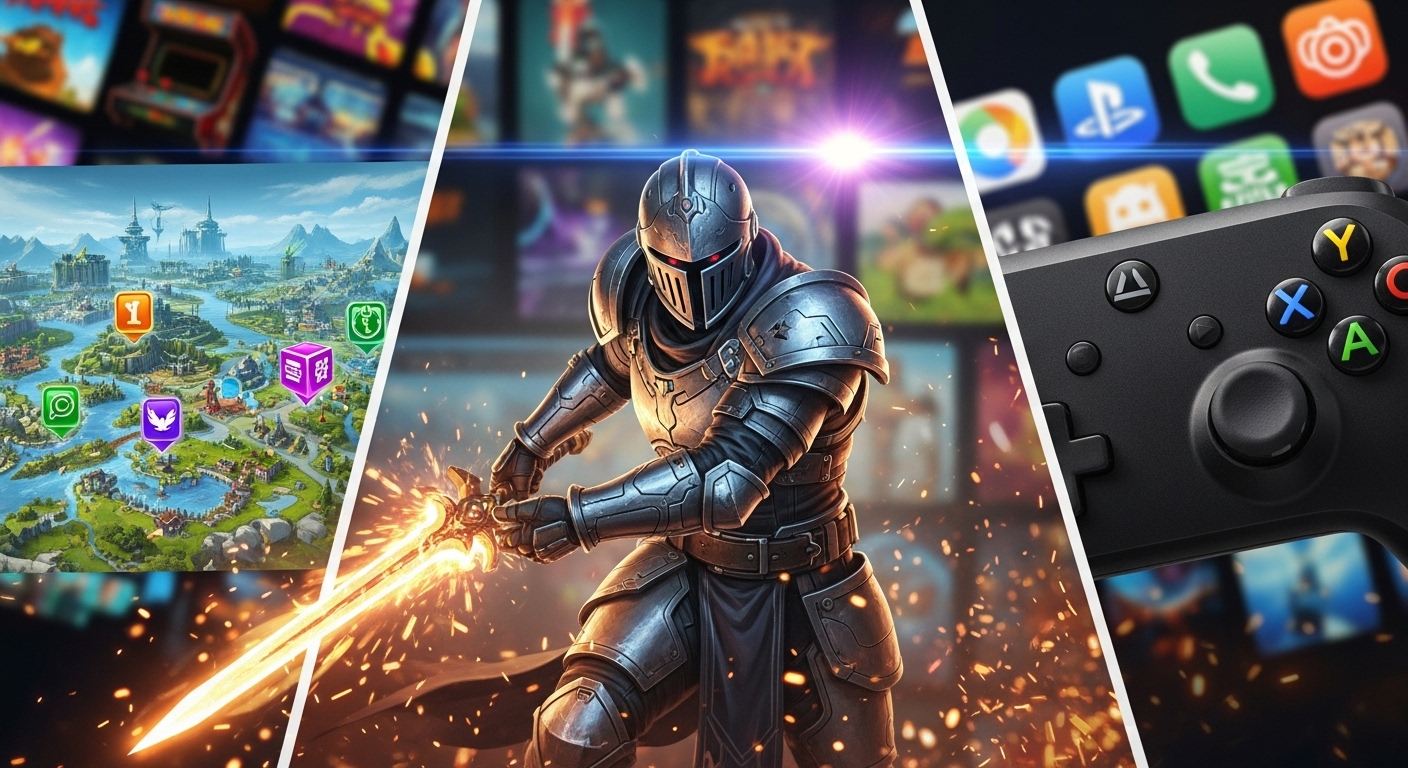
The Timeless Appeal of Games
Games have been an essential part of human culture long before the digital age. From ancient board games carved into stone to today’s immersive virtual realities, games have always reflected our innate desire for challenge, fun, and connection. They are more than just entertainment — they are a universal language that bridges generations and cultures. Whether played with cards, pieces, or pixels, games allow people to express creativity, test strategy, and share experiences.
In the digital era, the word “games” has taken on new meaning. No longer confined to physical objects or playgrounds, games have expanded into vast online worlds and interactive stories that engage millions simultaneously. They influence how we think, learn, and socialize, becoming one of the most transformative forces in modern life.
From Ancient Origins to Digital Masterpieces
The history of games is a fascinating journey through time and technology. Ancient civilizations played games like Senet in Egypt and Go in China, both of which required deep strategic thinking. These early games reflected social values and provided intellectual stimulation. Fast forward to the 20th century, and the birth of video games marked a new chapter in human creativity.
The 1970s introduced the world to simple yet revolutionary titles like Pong and Space Invaders. These games laid the foundation for what would become a multibillion-dollar global industry. The 1980s and 1990s saw rapid innovation as home consoles brought gaming into living rooms. With each generation of technology, games became more sophisticated, featuring better graphics, sound, and storytelling.
Today, gaming is no longer limited to specialized machines. With smartphones, consoles, and computers, nearly anyone can access countless types of games. This evolution shows that games are not just evolving technologically — they are evolving culturally, reflecting the changing dynamics of society itself.
The Power of Storytelling in Games
One of the greatest strengths of modern games lies in their ability to tell stories. Unlike movies or books, games place the player inside the narrative, giving them control over decisions and outcomes. This interactivity transforms storytelling into a deeply personal experience.
Games like role-playing adventures and open-world epics immerse players in complex universes filled with choices, consequences, and emotional depth. Players do not just observe heroes; they become them. This emotional engagement creates stronger connections between players and the stories they experience.
Beyond entertainment, storytelling in games has educational and therapeutic potential. It helps players develop empathy by allowing them to see the world through different perspectives. This power of interactive narrative is shaping a new generation of storytellers and redefining how stories are experienced.
The Art and Science Behind Game Design
Creating a game is a balance of art, psychology, and technology. Developers must understand how to engage players’ emotions and challenge their intellect while keeping the experience enjoyable. Every element — from visuals and sound to mechanics and pacing — contributes to immersion.
Artists and designers craft stunning worlds filled with imagination. Programmers bring those worlds to life through complex code and algorithms. Writers develop characters and stories that resonate with players. Musicians compose soundtracks that heighten emotion and excitement. It is a collaborative effort that combines creativity with scientific precision.
Game design also involves deep psychological understanding. Developers study player behavior to create systems that reward skill, exploration, and strategy. A well-designed game keeps players motivated, offering just the right balance of challenge and reward. This harmony between creativity and logic makes game development one of the most multidisciplinary art forms of our time.
The Rise of Online and Multiplayer Games
The internet has revolutionized how games are played and shared. Once solitary experiences have transformed into massive online worlds where millions of players interact in real time. Multiplayer games have become digital meeting grounds where friendships are formed, rivalries emerge, and teamwork thrives.
Online games such as battle royales, strategy titles, and cooperative adventures have created communities that span across continents. Players collaborate to achieve goals, compete for glory, or simply socialize in virtual spaces. This interconnectedness has made gaming one of the most social forms of entertainment in existence.
The rise of streaming platforms and content creation has further expanded the culture around games. Players are not just participants but also performers, sharing their experiences with global audiences. The result is a new form of entertainment where the act of playing becomes as captivating as the game itself.
The Educational and Cognitive Benefits of Games
Games are often misunderstood as distractions, but research and experience prove they can offer significant cognitive and educational benefits. Strategic games enhance problem-solving skills, while puzzle and simulation games encourage logical thinking and creativity.
Educational games are transforming classrooms, turning lessons into interactive experiences that make learning more engaging. Students can explore history, science, and mathematics in ways that feel immersive and fun. Even commercial games teach valuable skills such as teamwork, decision-making, and adaptability.
Moreover, games improve hand-eye coordination, reflexes, and multitasking abilities. They train the brain to process information quickly and efficiently, a skill that translates to real-world problem-solving. In this sense, games are not just entertainment — they are mental exercise for the modern age.
The Emotional and Social Impact of Games
Beyond learning and skill-building, games have a profound emotional impact. They provide a safe outlet for expression and creativity. Players can explore their identities, face challenges, and overcome fears in virtual environments. The sense of achievement after completing a difficult mission or building something extraordinary brings genuine satisfaction and confidence.
Games also promote social interaction, helping people connect across distances and cultures. Online friendships formed through gaming often extend beyond the digital world, creating meaningful human connections. For many, games serve as a form of therapy, offering relief from stress, anxiety, or loneliness.
Community-driven games further highlight this power. Cooperative play fosters empathy and understanding, reminding us that teamwork and communication are vital both in games and in life.
The Business and Technology Behind the Gaming Industry
The gaming industry is now one of the largest sectors of global entertainment, surpassing film and music in revenue. This growth is driven by technological advancement, creative innovation, and an ever-expanding audience. Each new generation of consoles and computers brings more power, allowing developers to push visual and interactive boundaries.
The rise of mobile gaming has made games accessible to billions. Small developers can now reach global audiences through app stores, creating opportunities for innovation and diversity. Meanwhile, virtual reality and augmented reality technologies are reshaping how players experience games, merging the digital with the physical world.
Artificial intelligence also plays a growing role in gaming. Smarter non-player characters, adaptive difficulty levels, and realistic simulations are making games feel more alive than ever. The industry continues to influence other technological fields, including robotics, machine learning, and cinematic production.
The Challenges Facing the World of Games
Despite its success, the gaming world faces important challenges. Issues like addiction, toxicity in online communities, and exploitative monetization models have raised ethical questions. Balancing player engagement with well-being has become a major concern for developers and policymakers.
Inclusivity and representation are also central discussions. Games are becoming more diverse, but there is still progress to be made in ensuring that everyone feels seen and respected within virtual spaces. Developers and communities are increasingly aware of these issues, working together to create safer and more inclusive environments.
The environmental impact of gaming hardware production and data centers is another growing concern. As technology advances, the industry must also embrace sustainability to ensure that innovation does not come at the cost of the planet.
The Future of Games and Human Experience
The future of games promises to be even more transformative. Artificial intelligence, cloud computing, and immersive technologies like VR and AR are creating new forms of interactivity. Games may soon become indistinguishable from reality, offering experiences limited only by imagination.
Beyond entertainment, games will play a larger role in education, healthcare, and communication. Training simulations are already used to teach complex skills in medicine, aviation, and engineering. Therapy through gaming is helping people manage mental health, trauma, and rehabilitation.
We are moving toward a world where games become part of everyday life — not as escapism, but as enhancement. They will continue to evolve alongside technology, shaping how humans think, learn, and connect in the future.
Conclusion
Games are more than a pastime; they are a mirror of human creativity and progress. They teach, inspire, and connect people in ways that few other mediums can. From ancient strategy boards to futuristic virtual realms, games have always captured the essence of play — the desire to explore, compete, and imagine.
As technology advances, games will remain at the heart of innovation and storytelling. They will continue to blur the boundaries between art, science, and emotion, guiding humanity toward new forms of interaction and understanding.
In every level completed and every story told, games remind us that life itself is the greatest game — one of endless challenges, growth, and discovery. The future of gaming is not just digital; it is deeply human, woven into the way we learn, dream, and connect beyond the screen.